From the Legal Front - June 2026
Hiddush's work on the legal front is broad and impactful — though, as we have noted in the past, it demands staying power and resolve
10/06/2026 10:09
Tags:
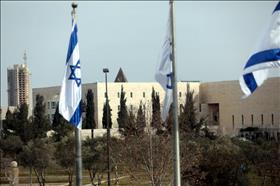
The Israeli Supreme Court Yossi Zamir, Shatilstock
Hiddush's work on the legal front is broad and impactful — though, as we have noted in the past, it demands staying power and resolve as the State's primary tactic is delays, delays, and more delays. Our legal work broadly falls into two categories:
- Landmark cases, which we typically initiate, and which carry broad and long-term implications
- Responding to appeals from citizens and groups harmed by the unholy alliance between religion and the state — and especially between religion and politics. At times, we are able to assist by approaching the authorities on behalf of those who contact us without the need for court proceedings; at other times, legal action is also required
Funding of the Ultra-Orthodox Parties’ School Networks
A field we have been engaged with for roughly two years, and which continues to expand, is the annual funding of billions of shekels from State coffers to the school networks of the ultra-Orthodox parties. We are simultaneously conducting three petitions, and from the moment we initiated the first, it was clear that we had opened a Pandora's box — one that spurred the State Prosecutor's Office and the Attorney General to leverage the channel we had paved in the Supreme Court to support our positions and halt the limitless funding that the ultra-Orthodox school networks were receiving in exchange for ultra-Orthodox support for the government. The primary basis underlying our petitions is the failure of these educational networks to fulfill their basic obligation to teach a full core curriculum, in return for the full State funding they receive.
- In the petition seeking to cancel additional fund transfers to the ultra-Orthodox party networks for 2025, the High Court ruled that no additional budgets will be transferred except to institutions that the Attorney General determines have taught the full core curriculum. This is a historic precedent, which we are proud to have pushed for! One of the attorneys representing the ultra-Orthodox networks, seated at the lawyers' table in court, was overheard quietly saying: “There goes the money...” 😊
-
In the petition that halted approximately one billion NIS per year, the State has requested yet another extension. Three school years have now concluded without the unlawful transfer of approximately one billion NIS per year to the networks.
-
In the landmark petition expected to reshape the entire funding structure of ultra-Orthodox education — in which the Court determined that the State must provide comprehensive responses to the failures raised in our petition — the State continues to request delays and is currently expected to respond toward the end of June. The AG has just approved the Education Minister’s demand for independent representation, making it clear to the Court that her office will still represent the Ministry of Education. So the court will be presented with two contradicting views coming from the State regarding the legality of the continued transfer of funds to the ultra-Orthodox networks and the extent to which they comply with the core curricular studies requirements.
Civil and Pluralistic Burial in Jerusalem
On April 19, the Supreme Court held a hearing on a petition we filed together with the Israel Religious Action Center, on behalf of Menucha Nechona Jerusalem and individual petitioners, demanding that the Ministry of Religious Services fund the development of a burial plot long designated for civil burial in Jerusalem. The law guaranteeing this right was passed thirty years ago yet remains unimplemented in much of the country, leaving residents of Jerusalem without any solution for pluralistic burial. The Court issued a show-cause order requiring the State to justify why it will not fund the plot and remove barriers preventing civil organizations from providing this service — an important milestone on the path to securing the right to civil and pluralistic burial for all Israelis.
The MK Deri Petition
MK Rabbi Aryeh Deri, the leader of Shas — who is barred from serving as a minister because of his criminal record, and who refuses to fulfill even the most basic duties of his role as a Member of Knesset — continues to receive a full salary from the Knesset budget as well as funding for three aides, a vehicle, and an office etc. There are other MKs who fall short of the accepted standards required of Knesset members, but there is no comparable example to Deri in terms of utter disregard for the duties imposed on a member of Knesset.
Following our petition, the Knesset Ethics Committee convened to address Deri's absences (and those of others) during the Knesset session that concluded a year ago. Despite Deri's failure to appear for approximately 80% of session days — including 44 days beyond the permitted number of absences — the Committee chose to impose a paltry fine equivalent to 8 working days' pay. In our brief to the court, we challenged the manner in which the Ethics Committee handled the matter and requested the Court's intervention. We are currently awaiting the Court's ruling.
Mikveh Planned Against Local Residents' Objections
Ramat Aviv HaYeruka is a predominantly secular neighborhood in northern Tel Aviv that has been subjected to "takeover" attempts by various religious groups, including Chabad and others. At the end of April, residents discovered that the municipality had decided to establish a mikveh (Jewish ritual bath) on a small street in the neighborhood, ostensibly in response to a request from the Neighborhood Residents Committee — except that the Residents Committee is opposed to the plan, as are most local residents!
The planned mikveh is on a small dead-end street on which three synagogues already operate, drawing worshippers primarily from other neighborhoods, and on which Chabad has also established an illegal kollel. The construction of a mikveh that would primarily serve those who do not live in the neighborhood would generate traffic and noise disruption, and could further embolden the groups seeking to alter the neighborhood's character.
We sent a demand to the municipality on behalf of the residents to rescind the decision, which was based on a false claim of support of the Neighborhood Residents Committee. Should a mikveh indeed be needed, it should be built in a location closer to those who require it — and one that does not conflict with this neighborhood's social character.
Freedom of Information Petition — Misleading IDF Data Regarding Ultra-Orthodox Enlistment
Ultra-Orthodox mass draft evasion has long been both a visceral issue for most Israeli Jews and a moral, political, and legal controversy. But since October 7, 2023, it has also become a critical security concern. Over the years, the IDF has provided the Knesset and the government with vague and partly false data on the scope of ultra-Orthodox enlistment and, though the practice of falsifying data has now ceased, the figures continue to be presented in a misleading and opaque manner. Accordingly, a year and a half ago, we submitted a Freedom of Information request to the IDF for more detailed and meaningful data regarding the numbers of ultra-Orthodox recruits reported to the Knesset. Our assessment is that most of those counted were not ultra-Orthodox at the time of their enlistment, and that the actual number of ultra-Orthodox recruits is far lower than reported.
Despite the legal requirement to respond within three months at most, the IDF ignored the request, and we had to petition the court to compel compliance. Only after the petition was filed did the IDF submit a response — claiming that most of the information is not in its possession, and that the Ministry of Education has been withholding data on the names of ultra-Orthodox students nearing draft age, and has not reported this to the IDF for two years.
Even the partial information we received demonstrates that the small numbers of ‘ultra-Orthodox recruits’ reported by the IDF are inflated numbers. A substantial portion may no longer be ultra-Orthodox, or may never have belonged to these communities at all. Given that many of the questions received no response whatsoever, Hiddush will file a motion for review of the response received and, if necessary, will return to the court.
Food Vouchers
After successfully preventing the distribution of food vouchers mostly to the ultra-Orthodox in 2023–24 — with the Supreme Court ruling that any future distribution must be based on new, equitable criteria — the budget was not distributed at all in 2025, because Shas ministers once again attempted to impose criteria that would give priority to the ultra-Orthodox.
We issued a demand that the funds not go to waste again in 2026, given that many families across Israel are suffering from food insecurity. Following our letter, the Welfare Ministry issued a press statement declaring an intention to distribute food vouchers — but the criteria by which they will be distributed have not yet been published.
We are working alongside a coalition of organizations promoting food security among Jews and Arabs alike. The fact that criteria have not yet been published and that we have received no response raises concern that they will once again attempt to distribute vouchers with preference given to the ultra-Orthodox, and will do so close to elections in order to present it as a political achievement. If we do not receive a response in the near term, we will petition the High Court of Justice to demand publication of the criteria and equal distribution of the budget to all those who are genuinely in need.
It bears emphasizing that our legal work does not stand alone. It is accompanied by collaboration with partner organizations, extensive media and social media exposure that amplifies the effort to drive reform and policy change, and ongoing engagement with policymakers and appearances before Knesset committees.